The article explains how fractions bitcoins as payment theblockchainbrief affect merchants and buyers. It shows clear steps to accept small bitcoin amounts. It gives practical examples and cost comparisons. It aims to help businesses decide quickly.
Key Takeaways
- Fractions bitcoins as payment theblockchainbrief allow merchants to accept small bitcoin amounts, enabling low-friction, cross-border transactions that attract tech-savvy customers.
- Using layer-2 networks and satoshis reduces fees and accelerates settlement times, making fractional bitcoin payments practical and cost-effective compared to traditional card fees.
- Merchants must choose between custodial and noncustodial wallets based on their risk tolerance and refund policies, balancing control with convenience.
- Integrating bitcoin fraction payments involves selecting infrastructure, adding checkout plugins or apps, training staff, and monitoring fees and settlement times for optimization.
- Starting with small test transactions helps merchants adapt smoothly and scale bitcoin fraction payments to grow niche sales and enhance customer loyalty.
Why Merchants And Consumers Are Turning To Fractional Bitcoin Payments
Merchants seek lower friction in cross-border sales. Consumers want payment choices and privacy. Fractional bitcoin payments let buyers send small amounts. They let merchants receive global payments without bank hours. Merchants view these payments as new sales channels. Consumers view them as fast alternatives to cards.
The main driver remains unit divisibility. Bitcoin breaks into satoshis. Users can pay cents with a satoshi-level amount. This ability drives interest in fractions bitcoins as payment theblockchainbrief. New wallets show prices in local currency and in bitcoin fractions. This display reduces confusion and boosts conversion.
Another driver is fee predictability. Layer-2 networks reduce on-chain fees. Merchants compare card fees to bitcoin fraction fees and often find savings for some flows. Developers build plugins that let cash registers accept tiny bitcoin amounts. These plugins let staff create invoices and scan QR codes.
Regulation and tax teams adapt. Some jurisdictions treat bitcoin as property. Others treat it as currency. Merchants consult advisors before they accept fractions bitcoins as payment theblockchainbrief. Businesses that plan compliance set simple reporting flows and avoid surprises.
Finally, brand and marketing matter. Small merchants use bitcoin options to attract tech-aware customers. Buyers notice merchants that accept bitcoin fractions. That attention can grow repeat sales and social sharing.
How Fractional Bitcoin Payments Actually Work
Merchants run wallets or payment processors to receive payments. Buyers open wallets or use payment apps to send funds. The apps convert a price into bitcoin fractions. The apps create a payment request or a QR code. Buyers scan the code and confirm the amount.
Satoshis, Layer‑2 Solutions, Fees, And Settlement Times
A satoshi equals one hundred millionth of a bitcoin. Wallets display satoshis and local currency. Layer-2 solutions move many payments off the main chain. They bundle payments into single on-chain transactions. The bundling lowers average fee per payment. Merchants use Lightning and other layer-2 networks to receive sub-dollar payments. Buyers use compatible wallets to send funds instantly.
Fees vary by method. On-chain fees rise with network demand. Layer-2 fees often stay low. Payment processors may add a small service fee. Merchants choose fixed-fee plans or volume-based plans. They compare total cost per transaction before they commit.
Settlement times depend on method. On-chain confirmation can take minutes to an hour. Layer-2 payments settle in seconds. Merchants set policies for finality. They might accept instant layer-2 receipts for low-risk goods. They might require on-chain confirmation for high-value sales.
Merchants consider custodial and noncustodial custody. Custodial services manage keys and simplify refunds. Noncustodial wallets give merchants full control of funds. Merchants weigh control versus convenience when they accept fractions bitcoins as payment theblockchainbrief.
How To Start Accepting Fractional Bitcoin Payments Today
The merchant picks a clear use case. The merchant decides whether to accept online, in-store, or both. The merchant selects a wallet or a payments provider. The merchant tests the flow with small amounts first.
Step 1: Choose infrastructure. The merchant can run a noncustodial wallet or use a payments processor. Noncustodial wallets keep keys local. Processors handle conversions and invoices. The merchant chooses based on staff skill and risk tolerance.
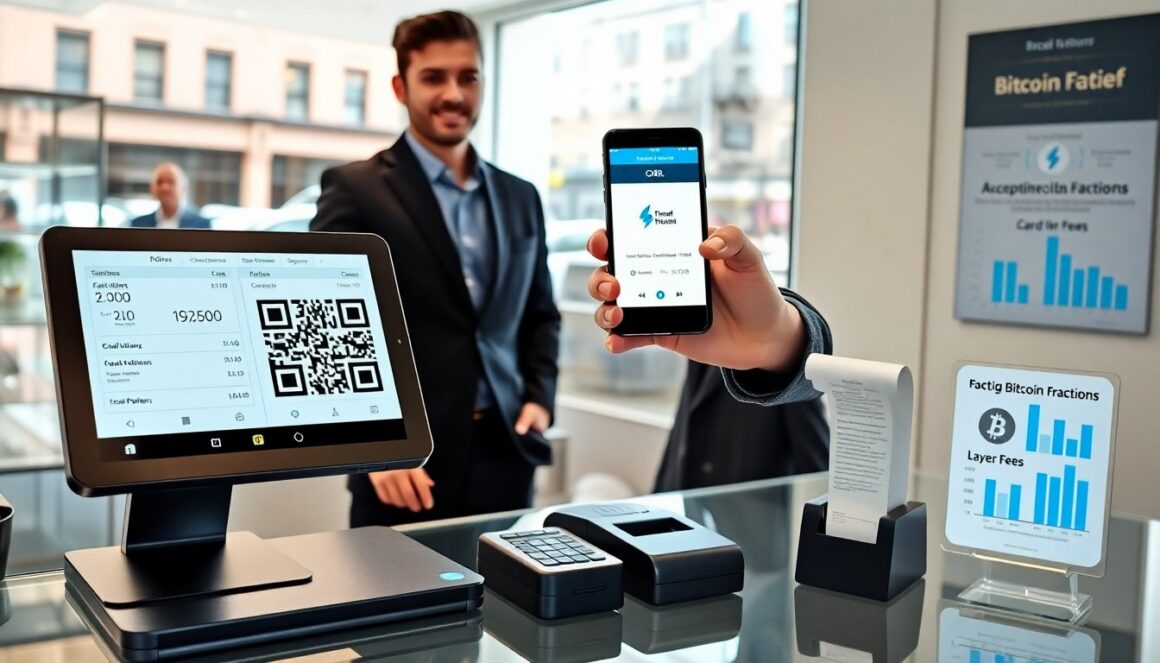
Step 2: Add checkout integration. The merchant installs a plugin or a point-of-sale app. The plugin shows prices in local currency and in bitcoin fractions. The app generates a QR code for each sale. The customer scans the code and sends the payment.
Step 3: Set pricing and refunds. The merchant decides whether to price in local currency or in bitcoin. Pricing in local currency simplifies accounting. The merchant sets refund rules that match their custody choice. Processors often automate refunds.
Step 4: Train staff and label receipts. Staff learn to handle QR codes and payment confirmations. Receipts show the bitcoin fraction amount and the local equivalent. Clear receipts reduce disputes.
Step 5: Monitor and optimize. The merchant tracks fees, chargebacks, and settlement times. The merchant adjusts settings to lower costs. The merchant might enable auto-conversion to local currency to reduce volatility exposure.
Merchants who move forward often start small. They test with a few customers and then scale. They report that fractions bitcoins as payment theblockchainbrief drive niche sales and customer interest. Buyers who prefer bitcoin notice the option and return for repeat purchases.