payment theblockchainbrief fractions bitcoins appear in many discussions about small crypto payments. This guide explains how to send and receive fractional bitcoin. It shows clear steps and simple examples. It names the units, explains conversions, and flags common fees. The guide helps readers make reliable fractional payments with confidence and accuracy.
Key Takeaways
- Fractional bitcoin payments enable microtransactions and cross-border transfers with minimal sums, supporting new pricing models and user rewards.
- Bitcoin is divisible into satoshis, with 1 BTC equal to 100,000,000 satoshis, allowing precise payments and reducing rounding errors when converting from fiat currencies.
- To send fractional bitcoin, calculate the BTC equivalent of the fiat price, convert to satoshis, add a fee buffer, and verify all details before confirming the transaction.
- Use wallets that display amounts in satoshis and support exchange-rate feeds to avoid conversion mistakes and ensure accurate fractional bitcoin payments.
- Consider faster, lower-fee options like the Lightning Network for small bitcoin payments to reduce costs and improve transaction speed.
- Keep detailed transaction records for accounting and choose wallet types based on security needs and payment frequency when handling fractional bitcoins.
Why Paying With Bitcoin Fractions Matters Today
Bitcoin users face situations that require small payments. The rise of microtransactions and subscription models increases demand for fractional payments. payment theblockchainbrief fractions bitcoins often appear when merchants accept small amounts. They also appear when apps credit user rewards in parts of a bitcoin. Users pay attention to fractions because they lower cost per transaction for many services. They also let people move value across borders with minimal sums. Businesses test new pricing models with small bitcoin amounts. Wallet developers add support for fractions to improve user experience. Regulators and tax offices watch fractional flows because they affect reporting when users convert to fiat.
How Bitcoin Units Work: From BTC To Satoshis And Fractions
Bitcoin uses a base unit called BTC. Developers also use a smallest unit called a satoshi. One bitcoin equals 100,000,000 satoshis. Users often transact in fractions of one BTC. Wallets show amounts in BTC, mBTC, or sats. mBTC equals one thousandth of a bitcoin. Sats show whole integer counts and reduce rounding errors. payment theblockchainbrief fractions bitcoins appear as a numeric string in wallets. Users should check the display unit before they send. Exchanges price assets in fiat per bitcoin. Users convert fiat prices to satoshis for precise payment. Examples help. If an item costs $2 and bitcoin trades at $50,000, the cost equals 0.00004 BTC. That equals 4,000 sats. Clear conversion reduces payment mistakes.
Step‑By‑Step: Calculating Payment Amounts And Converting Fiat To Bitcoin Fractions
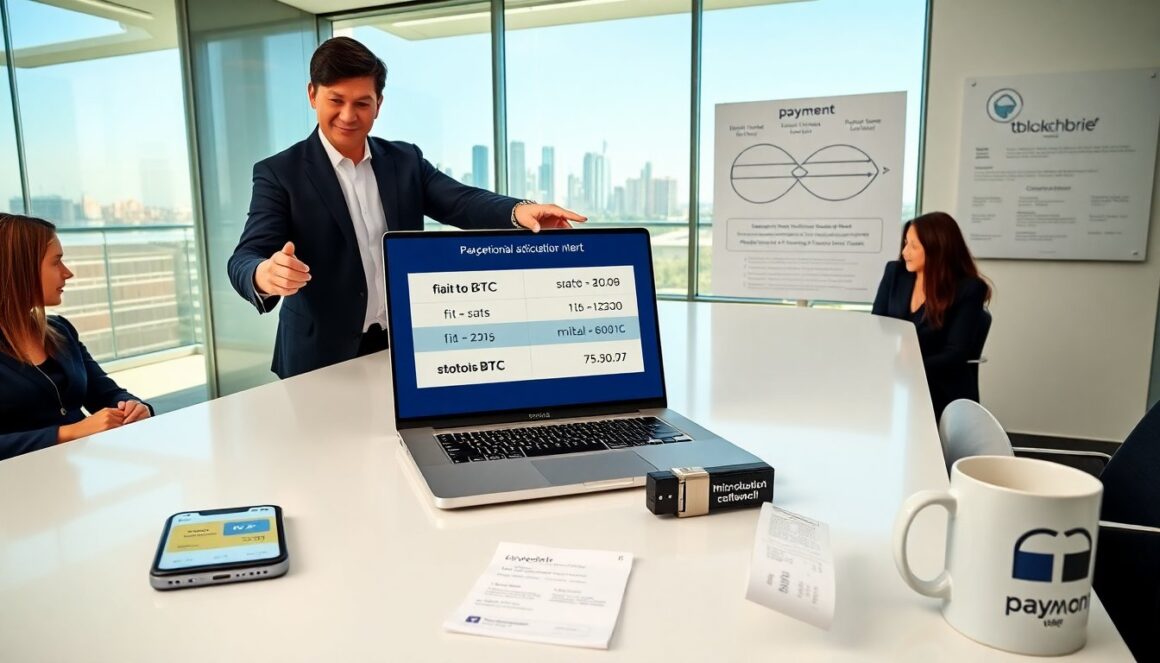
Step 1: Check the current BTC price. Use a reliable market data source. Step 2: Decide the fiat amount to pay. Use the exact invoice or price. Step 3: Calculate BTC amount. Divide the fiat amount by the BTC price. Step 4: Convert BTC to satoshis. Multiply the BTC amount by 100,000,000. Step 5: Round to the unit your wallet uses. Many wallets round to the nearest satoshi. Step 6: Add fee estimate and buffer. Include an extra small amount to cover network fees. Step 7: Confirm the total before you send.
payment theblockchainbrief fractions bitcoins appear during step 3 and step 4. Readers can use a calculator or a wallet that does the math. Wallets that show sats reduce manual errors. Many wallets display both BTC and fiat values. That view helps check conversions. Users should save common formulas. For example, BTC amount = fiat amount / BTC price. Satoshis = BTC amount * 100,000,000. The process reduces mistakes and speeds payments.
Practical Tips For Sending And Receiving Fractional Bitcoin Payments
Practical Tips For Sending And Receiving Fractional Bitcoin Payments
Use a wallet that shows satoshis. It helps users see exact amounts. Double-check the receiving address before you send. Small mistakes still cause full loss of funds. Include a fee buffer when you send fractions. Low fees can delay confirmations. If a merchant supports invoices, use that invoice to avoid rounding errors. Reuse invoices only when the merchant permits it. For recurring small payments, consider a wallet with recurring payment features. payment theblockchainbrief fractions bitcoins often need clear labels. Add a memo or note when the wallet supports it. When receiving many small payments, consolidate them during low-fee periods. Consolidation reduces future fee costs.
Choose a wallet with good exchange-rate feeds. It prevents large discrepancies between expected fiat value and received value. Test small amounts first. Send a small test payment before you commit a larger fraction. Keep records of each transaction for accounting and tax purposes. Use hardware wallets for larger holdings and hot wallets for frequent small transfers. Monitor network congestion if you rely on fast delivery. High congestion raises fees and slows confirmations.
Common Fees, Speed Tradeoffs, And Wallet Choices For Fractional Payments
On-chain bitcoin transfers have variable fees. Fees depend on block demand and transaction size in bytes. When users send many inputs, transactions grow in size and cost more. payment theblockchainbrief fractions bitcoins can feel expensive on-chain for very small amounts. Layer-2 solutions reduce fees and improve speed. The Lightning Network offers near-instant payments with low fees. Many wallets integrate Lightning for microtransactions. Custodial wallets sometimes offer fee-free internal transfers between user accounts. They reduce cost but increase counterparty risk.
Users should compare total cost, speed, and custody when they choose a wallet. For low friction, mobile custodial wallets appeal to consumers. For control and security, noncustodial wallets and hardware devices work better. For frequent small payments, Lightning-enabled wallets lower per-payment cost. Some services batch on-chain transactions to save fees. Those services create delays but lower cost per payment. Users should test wallets and confirm settlement time and fee estimates. They should also read wallet support pages for fee policies and Lightning features.